Currently in Vietnam, the logistics industry comprises around 3,000 enterprises (EN) with an estimated demand for over 200,000 professionals by 2030. Despite being recognized as a service sector with substantial developmental potential and a pivotal role in economic growth, the workforce available for the logistics industry (specifically in supply chain services) only meets about 40% of the demand.
THE PARADOX OF “SHORTAGE – SURPLUS”
According to a survey conducted by the Vietnam Logistics Service Businesses Association (VLA), merely 5-7% of labor in this sector undergoes specialized training.

Only about 5-7% of the workforce in the logistics industry receives specialized training
The stark reality portrays a scenario in which the logistics industry faces a shortage of highly skilled labor while having an excess of personnel handling simple tasks like warehouse management, inventory checks, and customs procedures. Most logistics businesses in Vietnam, particularly small and micro-enterprises, lack the financial capacity to demand high-quality workforce and tend to employ individuals with basic knowledge.

The logistics industry is experiencing an oversupply of manpower for simpler roles that do not require high expertise
In contrast, large-scale logistics enterprises in Vietnam are grappling with a severe shortage of highly specialized personnel with profound knowledge in logistics technology crucial for system operations. Training programs in logistics 5PL (Fifth Party Logistics) and e-commerce are also limited due to the novelty of these fields, making it challenging to find in-depth training programs offered by universities or educational institutions.

The shortage of high-quality personnel with deep knowledge in technology within the Logistics industry is critical.
A survey conducted by the Ho Chi Minh City Institute for Development Studies indicates that 53.3% of enterprises lack employees with qualifications and knowledge in logistics, 30% are retraining their staff, and only 6.7% are satisfied with their employees’s expertise.
SOLUTIONS FOR VIETNAM’S LOGISTICS WORKFORCE ISSUE
To address the shortage or surplus of workforce in the logistics industry, specific policies tailored to various labor groups operating within this domain are essential:
For the basic workforce not requiring high specialization, tapping into human resources from related fields like transportation, international trade, maritime logistics, import-export, and retraining through On the Job Training (OJT) programs can be beneficial. This vast pool of labor can adequately supply smaller and micro-scale logistics businesses.

Utilizing On the Job Training (OJT) & Human Resources from Related Fields: Transportation, International Trade,…
For the highly specialized workforce crucial for 5PL-modeled logistics businesses and e-commerce, establishing a cooperative training strategy between higher education institutions and enterprises is necessary. The training programs should align closely with practical applications, and faculty members must comprise knowledgeable business practitioners to ensure the training programs are practical and effective.

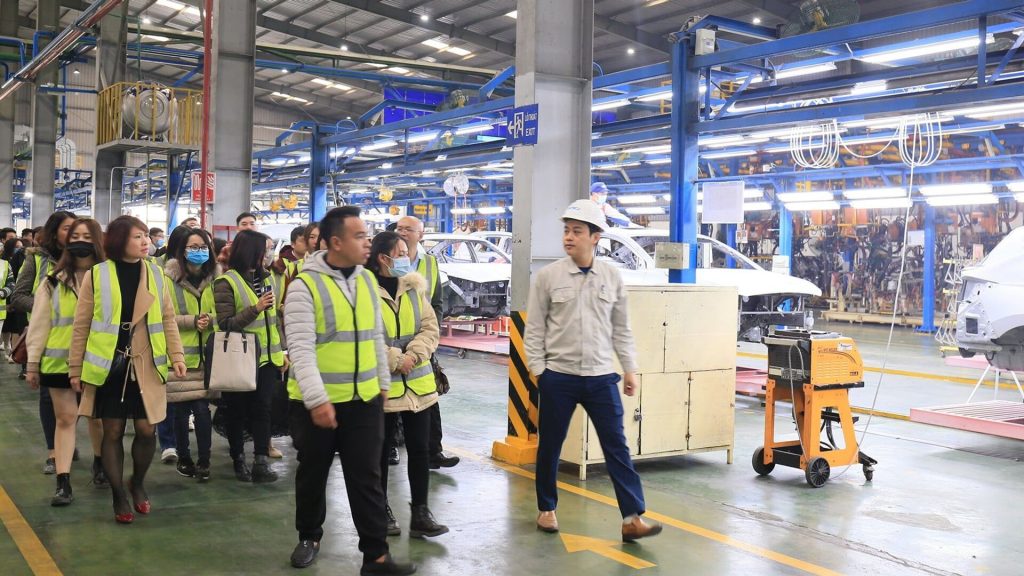
Enhancing practicality in training programs to build a high-quality workforce
For government managerial staff overseeing logistics activities at central and local levels, additional logistics-related training is imperative to provide sound advice to leaders at various levels regarding the strategic development of the industry’s workforce.
Efficient policy implementation requires significant governmental support in strategizing and, notably, providing financial resources for logistics enterprises and educational institutions to enhance the quality of their workforce. Only then can the target of sustaining a growth rate of 15-20%, as outlined in Decision No. 221/QĐ-TTg dated February 22, 2021, by the Prime Minister for the 2020-2025 period, be achieved.
With a mission to provide Global-standard logistics solutions and accompany customers in building sustainable value chains, 3A Logistics consistently focuses on developing its workforce in both Quality and Quantity.